


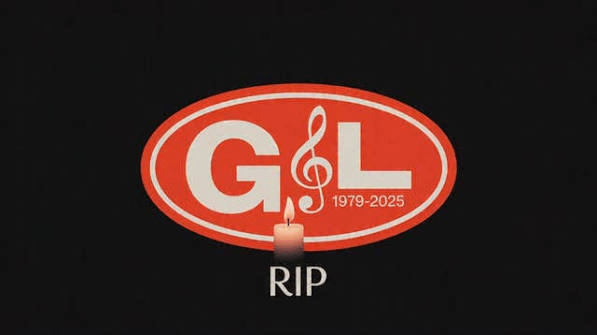
If you’ve ever picked up a G&L guitar, you know Leo Fender’s fingerprints are all over its DNA. For decades, G&L Musical Instruments maintained a devoted following by carrying on the legacy of innovation that started at Fender and Music Man. That being said, the question now echoing across forums and music shops is direct: Is G&L out of business, or could there be a comeback?
Let’s break down the facts, sidestep rumors, and clarify where things stand today for the G&L brand, its employees, and you—the player or collector evaluating your next move.
Timeline of Events: Tracking the Wind Down
Factory and Production Halt
Take the time to follow the operational signs. G&L stopped all guitar production in mid-September 2025. This was not a simple slow-down for inventory control or a holiday shut-down. Multiple first-hand reports confirm that the iconic Fullerton factory—yes, the one on Fender Avenue—ceased operating, with all machinery either sold off or removed from the site by late September.
By the end of September, the building was described as “gutted,” signaling no intent to restart. If you’re the type who likes to check the pulse of a company’s operations before making a purchase or business move, this is as clear as it gets.
Employee Status: The Human Toll
No business can function without its team. According to employee records and online discussions, every member of G&L production staff was furloughed on September 15, 2025. That wasn’t the end of the difficult news: by September 29, all were officially terminated—with modest severance, but little else in the way of security.
In a tight-knit industry where word travels fast, it only took days before former builders and salespeople confirmed the reality on guitar forums, social media, and hobbyist communities. That level of unanimity rarely occurs unless the changes are permanent.
Corporate Dissolution: The Final Paperwork
Operations ceasing is one step, but dissolving a parent company is another. On October 28, 2025, BBE Sound Inc.—the guardian company of G&L—terminated its corporate status in California. Public documents confirm this step, and industry sites now list G&L as “defunct (2025).”
When a parent company is dissolved, you can’t afford to ignore the implications: bank accounts are closed, trademarks cleared for transfer, and any remote hope of a direct restart under the existing umbrella vanishes.
Lack of Public Announcement: Reading Between the Lines
G&L, unlike some other legacy brands, never issued a glossy press release or formal farewell letter. Fender, which has a stake in the future of the Leo Fender name, stayed silent as well. That has left some fans holding out hope. But take a step back—most corporate closures of this magnitude make the business news circuit within hours. The absence of a public closure statement only adds confusion, not evidence of a secret plan.
If you manage staff or own a brand, you know a quiet shutdown is almost always a sign of crisis—one that doesn’t allow for drawn-out goodbyes.
Confirmation from Employees and Insiders: The On-the-Ground Truth
Look for direct evidence. Former shop builders and supervisors have gone on record saying, “G&L is dissolved, or gone, as of right now.” These are not rumors; these are the words of people who handled production lines, fretwork, and quality checks daily.
On Reddit and guitar communities, self-identified employees reported company-wide meetings where the entire team was told of the shutdown. For example, a long-time setup tech recounted, “Today was my last day. There is no next shift. The factory is finished.”
Industry price guides, which have no incentive to spread rumors, are also blunt: “No new G&L guitars will be manufactured—at least not by the original team.” With statements this definitive from those in the trenches, you can plan accordingly.
Is G&L Going Out of Business or Already Gone?
Let’s apply a checklist-driven approach. Consider these facts:
– Production halted: September 2025.
– Employees terminated: end of September 2025.
– Factory emptied: documented by multiple witnesses.
– Parent company dissolved: October 28, 2025.
– Major trade registries: G&L listed as “defunct.”
Add up those signals, and the answer is clear. G&L, in its historic form, has already gone out of business. New instruments aren’t being manufactured, and the Fullerton operation—once a hub of design innovation—is silent.
Don’t look for hidden loopholes or pending announcements. If you’re evaluating whether to purchase inventory, invest in related equipment, or simply track brand value, treat G&L as a finished chapter—at least regarding its original incarnation.
Fender’s Role and the Potential for the G&L Brand
Another key consideration is what happens after a closure, especially when a bigger fish is circling. Multiple sources confirm that Fender, the legendary musical instrument giant, has acquired G&L’s intellectual property, trademarks, and related assets.
That doesn’t mean G&L-branded guitars will leave the Fender Avenue facility again. If and when the G&L name returns to store shelves, it won’t parallel the design process or culture of the original team. Instead, expect any future G&L products to come with different manufacturing, development, and management—likely reflecting Fender’s business model and priorities.
Remember, big acquisitions often lead to dormant brand names resurfacing years later—sometimes with little connection to the company spirit that built them in the first place. If you collect for sentimental or historical reasons, keep an eye out for subtle changes should the brand get a revival.
Current Status of G&L: What It Means for Players and Owners
So, where does all of this leave you? G&L instruments already in circulation are now part of a finite, fixed supply. No more are rolling off the line, and the craftsmen who built your legacy ASAT, Legacy, or SB-2 have moved on.
If you own a G&L or plan to acquire one, make maintenance and documentation a priority. Take the time to register serials, photograph condition, and keep receipts. Whether you’re a collector or a working musician, these steps support future resale or insurance claims, especially as prices begin to tick upward.
Monitor the used market. Already, price guides and online marketplaces indicate a slow but steady rise in G&L values since the shutdown, especially for USA-made models and Custom Shop builds. Demand is proving resilient, with buyers drawn to a classic that’s suddenly no longer available new.
The Business Owner’s Perspective: Accountability and Opportunity
If you run a music store, repair shop, or even a small importing business, take stock of your current inventory. Analyze your supply chain and consider what a finite brand means for repeat orders, backup parts, and customer warranties.
There are two main takeaways here:
1. You can’t afford to ignore the price increase for key legacy models. Anticipate higher resale values, with both risk and potential reward attached.
2. Prepare in advance to communicate clear policies to customers. If warranty service is now out of reach for certain G&L guitars, set expectations early rather than fielding panicked calls after the fact.
If you’re thinking about investing in brands or guitar IP, study the way G&L’s closing was handled. This is a textbook case of quiet shutdown risk—vendors, customers, and employees all affected, but with no major headlines offering clarity.
What to Watch For: Possible Revival or New Chapter
Be prepared for Fender to someday use the G&L brand or design language. If new instruments appear under the G&L name, they will not carry the legacy of the Fullerton factory or original team, but they could still have market appeal.
Smart players and collectors will “create a weekly cash-flow snapshot and review it every Friday so you can spot shortfalls early.” That’s especially true now, when a once-widespread brand quickly becomes a niche collectible. Staying organized lets you pivot quickly if you spot a price jump—or if Fender launches a G&L reissue line down the road.
If you want to follow more evolving business developments, keep an eye on industry news outlets for the latest updates.
Conclusion: The End of G&L as We Knew It—But Not the End of the Story
To recap, the signs are direct and unambiguous. G&L Musical Instruments has effectively gone out of business. Production stopped, the factory is closed and empty, every employee is gone, and the parent company is legally dissolved.
Yet in the business world, the story often doesn’t end cleanly. Fender now owns the name and intellectual property. At some point, the brand could reappear—but it will be a different animal, owned and produced by new hands.
For players, collectors, and business planners, now is the time to act with clarity. Document your assets, monitor the resale market, and prepare for shifts in value. The curtain has fallen on G&L’s original operations, but the tools, knowledge, and accountability you bring to asset management and business decisions will help you make the most of this transition.
Smart operators face reality, adapt, and look for new opportunities without getting lost in nostalgia. That’s actionable advice, whether you’re managing a warehouse of guitars, a retail floor, or just your own working collection.
Also Read This:
