


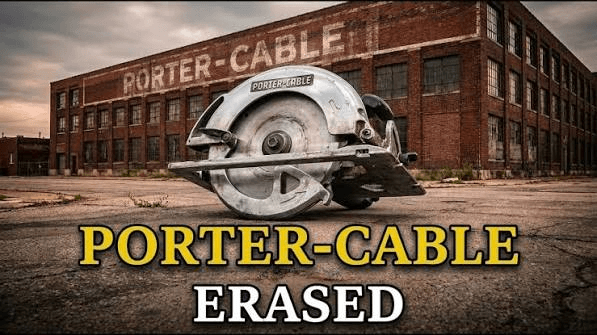
Porter-Cable has been a familiar name in the tool industry for over a century. For many years, contractors and hobbyists alike trusted its power tools on job sites and in garages. The company once occupied a strong position in the mid-tier tool market, with an emphasis on durability and affordability.
If you’ve shopped for tools recently, you may have noticed that Porter-Cable doesn’t seem as widely available. Many customers are asking: Is Porter-Cable going out of business? The reality is a bit more nuanced. The brand has not “gone under” in an official capacity. However, signs suggest Porter-Cable is not operating as a fully active, growth-focused company anymore.
Acquisition by Black & Decker
Take the time to examine the company’s ownership if you want to understand the shift. In 2004, Stanley Black & Decker—then simply Black & Decker—acquired Porter-Cable. This move signaled a major transition for the toolmaker.
After the acquisition, the new parent company decided to streamline its brands. Porter-Cable was merged into a portfolio that included DeWalt, Black+Decker, and Craftsman. Each brand was positioned differently, with Porter-Cable often slotted as an entry-level professional or advanced DIY label. While this seemed promising at first, the merger also marked the beginning of major changes in business strategy.
Shift in Manufacturing and Operations
If you were loyal to “Made in USA” Porter-Cable tools, the next change probably caught your eye. Over time, Stanley Black & Decker moved most Porter-Cable production out of the United States. Previous manufacturing hubs, such as the Jackson, Tennessee facility, were closed down. Production relocated primarily to facilities overseas, including China and Mexico.
You can’t afford to ignore what that means for quality and supply chains. Many long-term users noticed changes in build material and tool feel. While outsourcing can reduce costs, it often comes with tradeoffs in consistency and repair parts, too. In the case of Porter-Cable, this shift contributed to a slow fade from its original reputation for durability.
Lack of New Product Development
Another key factor has been the virtual standstill in new product launches. From around 2020 forward, industry watchers and regular customers both noticed that Porter-Cable’s cordless power tools, in particular, were not seeing real updates. Competitors like DeWalt, Milwaukee, and Makita were launching advanced brushless tools and smart batteries. Porter-Cable’s product line, on the other hand, largely stood still.
By 2021, tool review sites and retail employees began to call Porter-Cable a “zombie brand.” This is a phrase used for brands where existing inventory is sold off but investment in innovation has effectively ended. Take as an example the 20V cordless series—once a promising rival to other value brands, now static, with limited stock and no sign of model updates.
If your business or personal projects depend on having up-to-date, repairable tools, this type of product stagnation is a risk you need to evaluate early.
Retail Strategy and Market Position
One of the most telling clues about a brand’s trajectory is where you can still buy its products. Porter-Cable has experienced a steep decline in retail shelf space since 2020. At one time, it was a mainstay at big-box retailers like Lowe’s, Home Depot, and Amazon.
That being said, a major announcement came in 2021. Stanley Black & Decker signaled that Porter-Cable’s cordless products would be available exclusively at Tractor Supply Company (TSC). This type of exclusive distribution is usually a sign that a brand is being “contained” rather than aggressively grown.
For consumers and business owners, exclusive deals like this reduce price competition, limit your warranty support options, and make it harder to find replacement tools quickly. If your workflow depends on standardized tools across locations, or you rely on certain models, you need to plan ahead.
Discontinuation of Tools and Parts
Take a look at the current product catalogs, and you’ll spot another concern: an extensive list of discontinued products. This includes not only specialized tools, but also accessories, chargers, and batteries.
Several customer forums and parts suppliers report issues finding replacement parts for even relatively recent Porter-Cable models. That creates a twofold problem—first, warranty support gets trickier, and second, tool fleets can age out fast without clear upgrade paths.
You can’t expect a steady supply of core items if Porter-Cable isn’t bringing in new stock or introducing new models. For small business owners who standardize on a single brand for efficiency, this gradual pullback is a clear operational risk.
Conclusion: Porter-Cable’s Future
So where does all this leave Porter-Cable as of today? In short, the brand is not the dynamic, independent toolmaker it once was. It’s not “out of business” in the sense of a bankruptcy filing or a high-profile liquidation. However, all the available evidence points to a slow, quiet winding-down of operations.
Porter-Cable is still present on store shelves, but often in reduced capacity or niche markets. Most new sales occur at Tractor Supply and various online outlets. That means less innovation, reduced shelf space, and more difficulty tracking parts or support.
If you are purchasing tools for a growing business, be prepared to assess your risk tolerance. If your operation depends on wide retail options, ready availability of parts, or a proven track record of updates, consider building in alternative brands to avoid getting stuck.
That being said, Porter-Cable products may still fit certain needs, especially for basic, occasional use. For budget-conscious operators or home DIYers, remaining inventory can offer value. Just manage your expectations about long-term support.
Exploring Porter-Cable Product Availability
If you want to check tool availability before committing, take these steps:
– Visit Tractor Supply’s website and search for both core and specialty Porter-Cable tools. Make a list of what’s in stock.
– For discontinued parts, check third-party sellers, such as eBay, Amazon Marketplace, or tool specialty shops. Use model numbers for precise search results.
– If you already own multiple Porter-Cable tools, create a short inventory and highlight items that are essential for your workflow. Order critical spares in advance.
– Evaluate competitor offerings at your preferred price and performance level—many current DeWalt, Ridgid, and Makita lines compete in the same space.
– If you manage a business that uses standardized tooling, develop a phase-out or transition plan now, instead of being caught off-guard by shrinking supply.
For broader updates on industry changes and small business impacts, check out resources like InBusinessPress for guidance on vendor management and transition planning.
Remember, the key is consistency—track your tool inventory and sources, and make minor adjustments before small problems become costly disruptions.
FAQs About Porter-Cable
Q: Is Porter-Cable officially out of business?
No, the brand is not officially “out of business.” However, it is no longer actively growing, and many product lines have been discontinued or reduced.
Q: Where can I still buy Porter-Cable tools?
Currently, Tractor Supply Company is the exclusive large retailer for Porter-Cable cordless tools. Some online and specialty retailers still have leftover stock.
Q: Are Porter-Cable cordless tools still being made?
The most recent updates suggest that little to no new product development is happening. Existing models may still be produced or sold from inventory, but there are no signs of new releases.
Q: Will parts and accessories continue to be available?
Official support and parts availability are decreasing year by year. It’s smart to buy any items you depend on as soon as possible.
Q: Should I keep investing in Porter-Cable tools for my business?
If you require reliable long-term support, consider other brands for future purchases. However, for replacement or light use, Porter-Cable could still be a short-term value.
Q: Why did Porter-Cable decline?
Key factors include the shift overseas, reduced product innovation, narrowed retail strategy, and a focus on bigger brands by its parent company.
Final Thought: Take Action With Confidence
No matter where you stand, don’t wait for a headline to make decisions about your tools or supply chain. Create a weekly inventory review, track primary suppliers, and don’t be afraid to ask tough questions about vendor stability. In business and in building, it pays to be a step ahead, so you’re prepared for both slow changes and sudden shifts.
Set a regular schedule to review your tool needs now. Be proactive, keep your options open, and let the data steer your next steps. Porter-Cable’s journey may be winding down, but your business resilience doesn’t have to follow suit.
Also Read This:
