


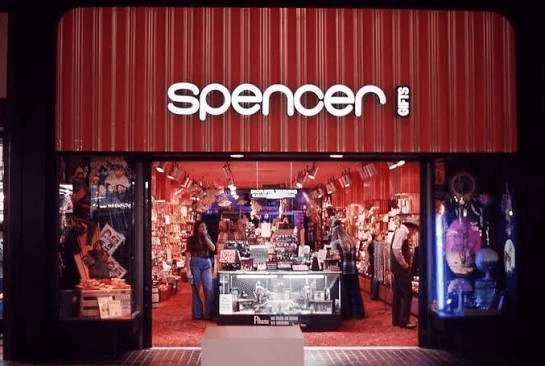
If you’ve checked the headlines or opened social media lately, you might have seen stories claiming, “Spencer’s is shutting down.” It’s confusing and concerning, especially if you’re a business owner who keeps an eye on major retailers. The truth, though, is more nuanced—and for business leaders, it’s a good lesson in reacting to fast-moving market rumors and separating fact from fiction.
Let’s get right to the facts about Spencer’s. There are two different retailers often mixed up in these conversations: Spencer’s Gifts (a U.S./Canada mall retailer), and Spencer’s Retail (a grocery chain in India). Both are facing challenges, both are closing stores, but neither is completely shutting down. Here’s what’s really going on—and what you can learn from their strategies.
Understanding the Two “Spencer’s” Brands
First off, don’t confuse the two. Spencer’s Gifts is the novelty store you find in North American malls, known for humor t-shirts and adult gifts. Spencer’s Retail is a supermarket chain in India, run by the RP‑Sanjiv Goenka Group. Each has taken a very different path over the past year, so if you hear “Spencer’s is closing down,” step back and ask, “Which one?”
Take the time to research both before you draw conclusions or share the rumor. You can’t afford to ignore the details—especially if your business depends on accurate retail trends or you’re learning strategy from industry moves.
Spencer’s Gifts (U.S. and Canada): The Rumor, the Reality
Let’s focus on the U.S. and Canadian chain first. Chances are, you or someone you know has wandered into a Spencer’s Gifts while shopping at the mall. Their stores are famous for eye-catching displays, funny mugs, and edgy merchandise that targets teens and young adults.
Over 600 Spencer’s locations are still in operation across the United States and Canada. But viral social posts sprang up in 2024 claiming, “Spencer’s is closing all locations—end of an era.” Some videos showed empty shelves or “Store Closing” signs, adding fuel to the rumor mill.
For clarity: These rumors are simply not true for the chain as a whole. Instead, the reality is targeted closures. Spencer’s is shutting down select, underperforming stores—usually in struggling or redeveloping malls—instead of closing the entire operation.
Examples of Recent Spencer’s Gifts Store Closures
It pays to look at specific cases instead of sweeping statements. Here are a few:
– The Spencer’s at Brookfield Square in Wisconsin closed its doors. But other Spencer’s locations in greater Milwaukee remain open and fully stocked.
– The Harford Mall location in Bel Air, Maryland, is scheduled to close by May 2026. However, inventory from that store will be sent to nearby Spencer’s outlets, meaning that the brand’s presence continues in the area.
– At Old Hickory Mall in Jackson, Tennessee, Spencer’s is closing its spot, but moving focus to a newer, nearby store on Vann Drive.
– Mall closures in places like Lakeforest (Maryland) have been ongoing over the last few years.
This approach isn’t unique—many mall retailers are thinning their footprints, either due to decreased mall traffic or because those particular shopping centers are being redeveloped.
What’s Actually Happening: Selective Downsizing, Not a Shutdown
The main headline here should be: Spencer’s Gifts is not closing chain-wide. The company is optimizing its footprint—getting rid of underperforming locations while doubling down on stores with healthy sales and traffic. As of 2024, hundreds of stores remain open and operational.
In fact, whenever rumors surface of massive, immediate closures—like one social post implying “all stores closing today at 7PM”—they’re generally based on misunderstandings. The only mass closure occurred during the peak of the COVID-19 pandemic, and that was a temporary shutdown ordered by public health officials. Stores reopened soon after as restrictions lifted.
If you’re running a retail business, it’s a wake-up call: be ready to clarify your status quickly if viral posts threaten customer confidence. Spencer’s management regularly issues firm statements—“No, Spencer’s is not closing all its locations”—to cut through the noise.
Spencer’s Retail in India: A Different Kind of Retrenchment
Now, let’s shift to India—where the picture is very different, but just as instructive. Spencer’s Retail operates supermarkets and hypermarkets in various metros and towns. Over the last year, Spencer’s Retail made tough calls to exit entire regional markets and shut down dozens of locations.
For example, Delhi-NCR, Andhra Pradesh, and Telangana have seen Spencer’s supermarkets shut their doors. Reports confirm that 49 stores—contributing around 22% of the company’s revenue but generating steep losses—are closing to help stem red ink. Management has cited a need to become EBITDA-positive (that’s a key measure of operational profitability) by the end of the next fiscal year.
In southern states, including Kerala and Tamil Nadu, Spencer’s shut down several “non-performing” hypermarkets. In Kerala in particular, the iconic Thiruvananthapuram store closed, alongside several others, marking a full exit from the region.
Breaking Down Spencer’s Retail’s Latest Strategy
The retrenchment plan is straightforward: stop operating in regions that deliver consistent losses and put every resource behind stronger-performing markets. It’s a principle most business owners know—you “prune to grow,” focusing on cash-positive areas rather than subsidizing weak spots indefinitely.
For Spencer’s Retail, the chosen core is Eastern India and Uttar Pradesh. Stores here have delivered steadier performance and are now central to the company’s growth plan. Leadership has made it clear: “We will focus on areas that are EBITDA-positive and build on our core strengths.”
It’s a disciplined move. While abrupt closures can frustrate employees and customers in affected regions, refusing to address chronic losses is riskier in the long run. If your business faces repeated losses in specific markets, take a hard look at a similar approach. Sometimes, pulling back can be the most responsible way to protect the rest of the business.
Why Is “Spencer’s Is Going Out of Business” Trending?
Here’s where confusion picks up speed: viral posts rarely include regional context. You’ll see headlines like “Spencer’s is closing, end of an era,” without clarifying whether the news applies to a Wisconsin mall, a Delhi supermarket, or the chain as a whole.
The result? Readers—especially business professionals and mall-goers—get understandably alarmed and start sharing the news as if it’s a global collapse. In truth, two separate companies are making very different decisions, but because both share the name “Spencer’s,” rumors blend and multiply.
Social media accelerates the mix-up. Someone sees one Spencer’s location shuttered in the U.S., while another hears about mass supermarket closures in India, and suddenly everyone thinks every Spencer’s outlet is done for.
This isn’t just an oddity—it’s a practical lesson. If your brand or business shares a name or logo with another company, be proactive in communications. Make clear, simple statements. Add context. For business owners, keep an eye out for viral “shutdown” rumors and prepare statements in advance. You can’t afford to ignore misinformation when it can go global in hours.
Spencer’s Today: Still Standing, But Leaner
Let’s bring it together. The next time you hear someone say, “Spencer’s is going out of business,” you’ll know how to break it down:
– Spencer’s Gifts (U.S./Canada) remains open, with hundreds of locations still operating, but it’s trimming the fat in weaker malls. This is routine for adaptive retailers these days. Track which locations are closing in your region, but don’t expect the entire brand to disappear.
– Spencer’s Retail (India), on the other hand, is making painful—but necessary—cuts. The company will no longer operate in several northern and southern regions, including Delhi-NCR, Andhra Pradesh, Telangana, and Kerala. That being said, Spencer’s Retail is not completely out of business. It’s focusing all energy and resources on profitable strongholds like Eastern India and Uttar Pradesh.
Both companies are demonstrating something essential: it’s not the number of stores you keep open, but the quality and profitability of those locations. If you run a retail business, learn from this. Be prepared to exit unprofitable markets even if it means some painful headlines. Take the time to keep your messaging clear and consistent—especially if rampant rumors could spook your customers or partners.
What You Should Do Next
For business owners and retail managers, take a page from Spencer’s playbook:
– Monitor foot traffic and weekly store-level cash flow closely.
– Create a weekly cash-flow snapshot and review it every Friday so you can spot shortfalls early.
– Identify underperforming units and prepare action plans—close, relocate, or refresh.
– Communicate clearly with customers and stakeholders if closures become necessary.
– If rumors spread, get ahead of the story with factual statements and transparent updates.
Learn more strategies and get up-to-date analysis at In Business Press, where practical tools meet real-world examples.
The Bottom Line: Spencer’s Remains, But Adaptation Is the Rule
To wrap up: No, Spencer’s isn’t disappearing. Hundreds of Spencer’s Gifts locations remain open in the U.S. and Canada, and the chain will likely keep pruning weak stores as needed. Meanwhile, Spencer’s Retail in India is right-sizing by shutting down non-profitable stores and consolidating power in stronger regions.
If there’s one lesson to carry forward, it’s this: Don’t panic when you see headlines. Read for context, analyze the local vs. global impact, and—most importantly—run your own business with discipline. These are uncertain times, but adaptation and clarity will always beat rumors and confusion. Stay pragmatic, focus on your data, and remember: sometimes, closing a chapter in one region opens the door for deeper success somewhere else.
Also Read This:
