


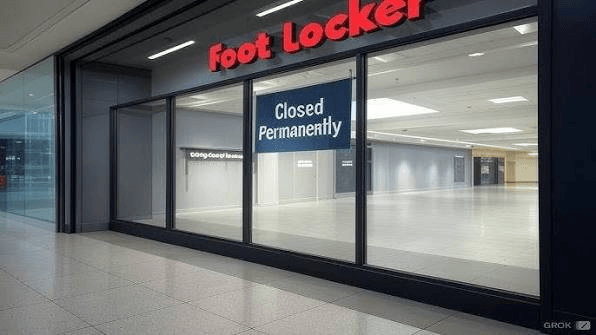
If you have been scrolling your news feed or watching business headlines, you might have seen plenty of bold claims like “Foot Locker is shutting down” or “Disappearing from your mall.” These can understandably set off alarm bells—especially if you’re a loyal customer, a local manager, or someone who depends on steady mall traffic for your own business. Here’s the truth: Foot Locker is NOT going out of business, but it is going through the most dramatic restructuring in its history.
Take the time to get the facts straight so you can make smart decisions, whether you’re planning your next purchase, your work future, or your local business strategy.
Current Status: Foot Locker Still in Business but Shrinking
Let’s be candid: the “retail apocalypse” claims get clicks, but they rarely paint the full picture. Is Foot Locker shutting down entirely? The answer is no. Foot Locker continues to operate globally. Stores remain open across malls and shopping centers. They’re serving customers every day, both in-person and through digital orders.
That being said, the company is shrinking its physical footprint by about 10%. This isn’t about vanishing overnight. Instead, Foot Locker is closing a sizable—but minority—portion of its worldwide stores. That means the brand remains visible in thousands of locations. They’re not disappearing, just becoming more selective about where and how they operate.
Store Closures: How Many, Where, and Why?
The background here is crucial. In 2023, before any acquisition news, Foot Locker’s own management rolled out a plan called “Lace Up.” The main goal? Address underperformance and future-proof the brand.
The plan involved closing roughly 400 stores by 2026—most of them underperforming mall locations. If you’re a small business owner, this is a move many can relate to: keep your winners, cut your losers. Foot Locker targeted C- and D-grade malls with lower foot traffic for most of these closures.
Here’s the rough breakdown:
– About 275 Foot Locker outlets would close.
– Another 125 locations under the Champs Sports banner would also go.
– The overall reduction aimed to bring the store count down to approximately 2,400 worldwide.
Why this “reset”? Weak sales growth, changing consumer habits, and the push to invest in more modern, “experiential” stores. Store closures are painful, but they clear the way for new investments.
Once Dick’s Sporting Goods acquired Foot Locker in 2025, the news cycle brought even scarier headlines. Dick’s initially floated bigger cuts—potentially up to 400 additional U.S. stores and thousands of job losses. Many worried about losing their hometown Foot Locker or seeing empty anchor stores in nearby malls.
But here’s the twist: after some successful store pilots—called “Fast Break”—Dick’s management reconsidered. They saw positive sales and customer response. They quickly walked back from the deepest cuts. The final number? A “much smaller” group of closures than first announced. The company reports that Foot Locker is actually expected to be profitable again by 2026.
If you’re running your own venture, use this as a lesson: test changes on a smaller scale. If the results improve, adapt quickly. Don’t let a negative forecast lock you into unnecessary cuts.
Who Owns Foot Locker? The Dick’s Sporting Goods Acquisition Explained
For anyone tracking retail news, mergers and buyouts can get confusing. In May 2025, Dick’s Sporting Goods announced it would buy Foot Locker for about $2.4 billion. The deal closed four months later. Now, Dick’s runs Foot Locker as a brand, alongside other banners like Kids Foot Locker, Champs Sports, WSS, and atmos.
It’s not a hostile takeover or a quiet death. Think of it as a well-funded parent company absorbing a distressed but valuable brand. Foot Locker continues as a “banner”—industry speak for a separate brand that keeps its unique style and core products, even as ownership changes hands.
If you operate in any business environment, situations like this are common: consolidation can rescue brands that still have value but need new investment or strategy.
How Foot Locker’s Business Model Is Changing
A business doesn’t survive fifty years (Foot Locker opened its first store in 1974) by standing still. Foot Locker’s new strategy is twofold.
First, there’s a major investment in new store formats—think “experiential” layouts built for sneakerheads and young shoppers. These aren’t your classic low-ceiling mall units stuffed end-to-end with racks. Expect brighter open spaces, digital touchpoints, and community events.
Second, Dick’s Sporting Goods is bringing its own toolkit. It’s aggressively cleaning up old inventory, marking down slow-moving merchandise, and pushing for a leaner operation. If you run a shop, you know that holding onto stale product eats cash and drags you down. Dick’s knows this too and isn’t afraid to take short-term markdown losses for long-term turnaround.
The new parent company is also pushing for better omnichannel integration—that means in-store and online shopping work together, not compete. For example, Dick’s is already a powerhouse in digital sales with strong buy-online, pick-up-in-store options. Expect similar tools, like inventory synchronization and shared customer accounts, to show up at Foot Locker.
Projections from Dick’s management expect Foot Locker to return to positive comparable sales and generate actual operating profit by 2026. Their confidence is based on what’s called “pilot group” results—smaller experimental stores showing strong sales growth relative to traditional locations.
What Does This Mean for Customers and Local Communities?
For everyday shoppers, you’ll likely see fewer mall-based Foot Locker locations, especially where foot traffic dropped post-pandemic. If you’re used to a quick sneaker run in a weak or empty mall, check online before heading over.
At the same time, look out for refreshed, remodeled, and sometimes larger Foot Locker outlets opening in stronger centers. The online presence is also becoming more seamless—expect better integration with Dick’s online platform and potentially smarter rewards programs.
If you’re a small business operating near a mall-based Foot Locker, you can’t afford to ignore the impact of closures. Less foot traffic means tightening your marketing and finding fresh ways to bring customers in. If you work or manage at Foot Locker, be prepared for the risk of job loss in areas targeted for closure; however, successful pilots suggest some jobs (and even new hiring in high-performing stores) will remain part of the future.
A key lesson here: when anchor tenants leave or shrink, nearby businesses are forced to get creative. Connect with remaining mall retailers or local organizations to build events that keep shoppers coming back. Losing a big-name brand can be a setback, but it’s also a chance to reset your approach.
Why “Going Out of Business” Headlines Miss the Mark
You’ve seen the doomsday headlines: “Is Foot Locker shutting down for good?” “Retail apocalypse claims another victim.” In reality, these stories often overstate or misinterpret the actual business strategy.
Here’s the reality:
– Foot Locker is closing about 10% of its global store base—not disappearing!
– Dick’s spent billions to buy, restructure, and keep the brand alive—not liquidate it.
– Positive early store pilot results mean Dick’s is scaling back on closures, not ramping up.
– Management expects Foot Locker to produce positive same-store sales and profits in 2026.
If you’re a business leader, it pays to look past dramatic stories and read company statements, investor presentations, and store pilot results. That’s where the real plans are revealed. Don’t panic when you hear “store closures.” Pause, check the facts, and analyze what it really means for your plans.
Understanding Headlines Like “Foot Locker Is Shutting Down”
When you encounter claims that Foot Locker is “shutting down,” take a beat. These phrases often refer to specific closure plans—especially the 400-store reduction announced across the U.S. and Canada or high-profile urban exits (such as in Manhattan, where several stores closed recently).
These headlines pack emotional punch, but don’t mistake them for national or global shutdowns. The majority of Foot Locker stores remain in operation. Dick’s Sporting Goods is betting on Foot Locker’s brand equity for its own future growth. If you want a resource for keeping tabs on these complex retail updates with actionable tips, visit In Business Press for focused business news.
Bottom Line: Foot Locker’s Future Under Dick’s Sporting Goods
For operators, investors, and everyday shoppers, the message is clear. Foot Locker is here to stay—transformed but not erased. They’re closing hundreds of underperforming stores, investing in new concepts, and integrating with a much larger parent company.
Expect continued change—smarter inventory, omnichannel sales, and tougher decisions about which malls or high-traffic neighborhoods make sense. But don’t expect a total collapse. The company is projecting a return to growth and profitability. For small businesses and professionals nearby, be proactive: monitor local store announcements and consider how altered shopping patterns could impact your own success.
Action step: Set a simple calendar reminder to check store lists or investor updates every month. If your business relies on mall traffic or Foot Locker’s audience, create a weekly plan to test new marketing or partnership ideas. An evolving retail environment means opportunities for those who watch closely and adapt early.
If you take anything away from the constant noise about retail bankruptcies, let it be this: businesses that simplify, test, and invest in their winners can survive and even thrive—even when the headlines say otherwise. Foot Locker’s playbook is no secret if you’re paying close attention. Your own business shifts may be smaller in scale, but the principles are just as vital. Keep an eye out for both risks and chances to grow as the industry changes.
Also Read This:
